Small Changes, Massive Impact
1. At Home (Yes, You!)
- Turn off taps when brushing or shaving: A running tap can waste up to 10 liters a minute. Just turning it off while you brush or lather can save 10–20 liters daily, that’s over 7,000 liters a year!
- Fix leaks immediately: That harmless drip from your tap can waste over 5,000 liters per year. Regularly check taps, pipes, and toilet tanks to catch leaks early and fix them.
- Run full loads in dishwashers/washing machines: Avoid half-loads. A full load maximizes the water and energy used, saving up to 1,000 liters per month. Use eco-mode where available.
- Collect rinse water: Place a bucket under AC units or near your shower while it warms up. Use that water for gardening, flushing, or mopping floors, a clever reuse trick!
- Choose native plants: These are adapted to your local climate and require less water, fertilizers, and maintenance. They also promote local biodiversity.
Quick Win: Fix one leaky tap this week. You’ll save more than
5,000 liters a year!
2. Your Plate is Powerful
- Choose plant-based options: Lentils, pulses, and vegetables have a water footprint nearly 10x lower than meat. Plus, they’re often healthier and more affordable.
- Buy local & seasonal: Transporting food over long distances adds to its hidden water and carbon cost. Eating seasonal produce also supports local farmers and reduces spoilage.
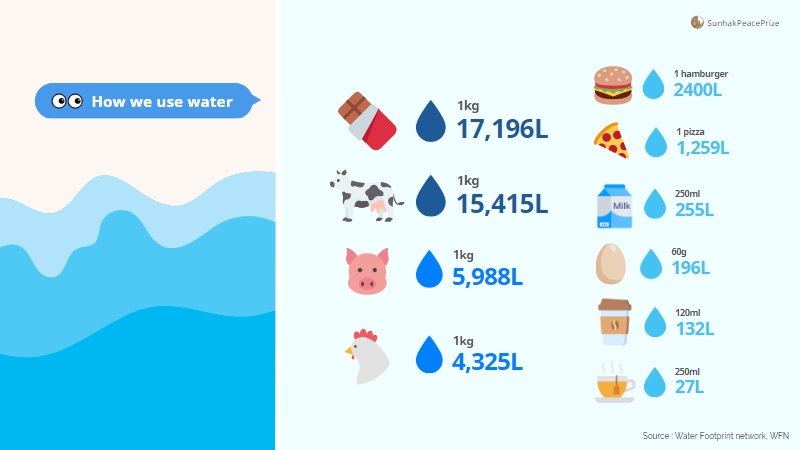
- Reduce processed foods: Packaged snacks, chocolate, and soft drinks may seem small, but their water use is massive. One chocolate bar can use over 1,700 liters!
Try This: Go plant-based every Monday. One meal = 2,000+ liters
saved.
3. Rethink Your Closet
- Thrift, swap, or upcycle: Buying second-hand extends a garment’s life, reducing waste and water use. Host swap parties or repurpose old clothes creatively!
- Choose sustainable brands: Look for certifications like GOTS, Fair Trade, or water-saving processes. Many modern brands offer recycled or responsibly sourced fabrics.
Challenge: No new clothes for a month. Restyle what you own.
4. Share What You Know
- Teach family & friends: Habits spread. If your sibling or parent starts saving water because of you, your impact multiplies without extra effort.
Try This: Post one water-saving fact or habit today using
#MyWaterFootprint.

What Should Industries Do?
- Conduct water audits: Just like energy audits, these help companies identify leaks, inefficiencies, and areas to improve. Transparent tracking leads to action.
- Innovate sustainable products: Dry dyeing, low-water washing, and biodegradable materials reduce both water usage and environmental impact.
- Publish sustainability reports: Public accountability encourages conscious practices and consumers increasingly support brands that care.
- Educate staff: Employee awareness training ensures water-saving habits are practiced daily on the ground, not just on paper.
Try This: Start internal water awareness campaigns in your
company or campus clubs.

What Can Governments Do?
- Provide incentives: Offer tax rebates or discounts for households and industries that adopt water-saving technologies like dual-flush toilets or drip irrigation.
- Run mass campaigns: Water conservation should be part of school syllabi, advertisements, and community events to instill habits from a young age.
- Fund innovation: Supporting startups in sustainable agriculture, AI-based leak detection, and water purification systems accelerates progress.
- Collaborate globally: Water scarcity is a shared problem. Governments can work together on research, technology exchange, and joint conservation initiatives.
Student Idea: Petition your local reps to install water refill
stations on campus!